
Refilling of Fire Extinguishers Services
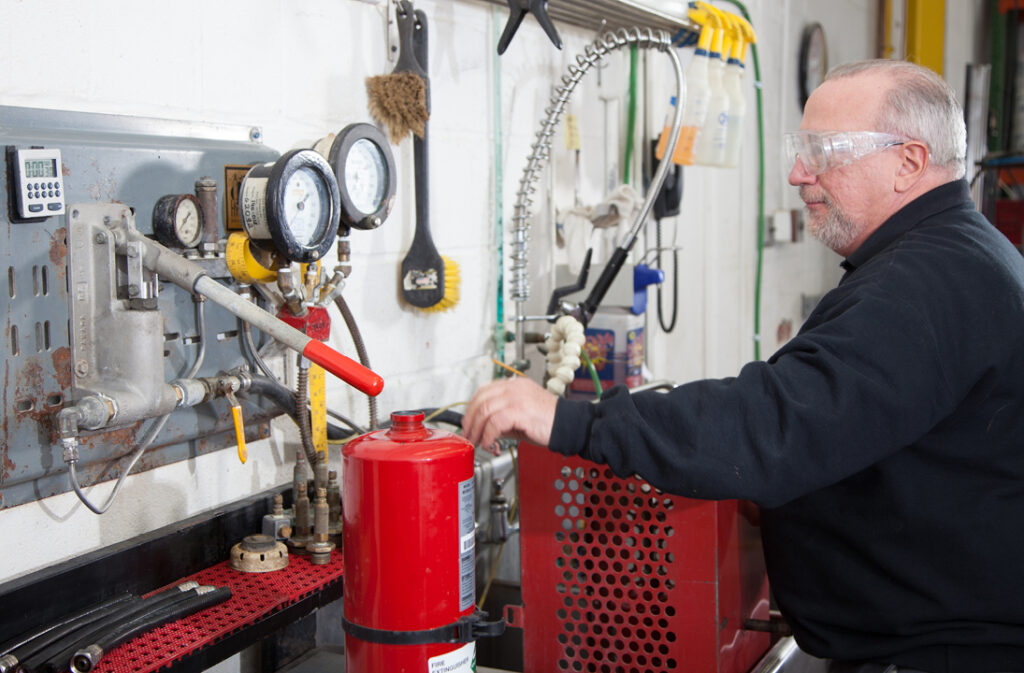
Refilling fire extinguishers requires adherence to specific guidelines and safety measures. Different types of fire extinguishers have different contents and refill procedures. Here’s a general overview of refilling details for common types of fire extinguishers:
Dry Chemical (ABC):
- Empty the extinguisher completely.
- Disassemble the extinguisher carefully, ensuring all parts are cleaned and inspected for damage.
- Refill with the appropriate dry chemical agent (monoammonium phosphate, sodium bicarbonate, or potassium bicarbonate) according to the manufacturer’s specifications.
- Reassemble the extinguisher and pressurize it to the specified pressure using dry nitrogen.
- Perform a pressure test to ensure the extinguisher is sealed properly and holds pressure.
- Attach a new tamper seal and inspection tag.
CO2 (Carbon Dioxide):
- Vent the remaining pressure from the extinguisher safely.
- Remove the valve assembly and inspect all parts for damage or wear.
- Refill the extinguisher with liquid CO2 to the specified weight.
- Reassemble the valve assembly, ensuring all parts are tightened properly.
- Pressure test the extinguisher to verify it holds pressure within the specified range.
- Attach a new tamper seal and inspection tag.
Water and Foam:
- Drain any remaining water or foam from the extinguisher.
- Inspect all parts for damage or wear.
- Refill the extinguisher with the appropriate water or foam concentrate mixture, following manufacturer guidelines.
- Pressurize the extinguisher with air or nitrogen to the specified pressure.
- Conduct a pressure test to ensure the extinguisher holds pressure.
- Attach a new tamper seal and inspection tag.
Wet Chemical:
- Drain any remaining agent from the extinguisher safely.
- Inspect all parts for damage or wear.
- Refill the extinguisher with the appropriate wet chemical agent according to the manufacturer’s instructions.
- Pressurize the extinguisher to the specified pressure using nitrogen.
- Perform a pressure test to ensure the extinguisher is sealed properly.
- Attach a new tamper seal and inspection tag.
It’s crucial to follow the manufacturer’s instructions and guidelines specific to each type of extinguisher. Additionally, refilling should be performed by trained and certified professionals to ensure safety and effectiveness. Regular maintenance and inspection of fire extinguishers are also essential to ensure they are in proper working condition when needed.